The Attitudes of Animals in Motion (1881)
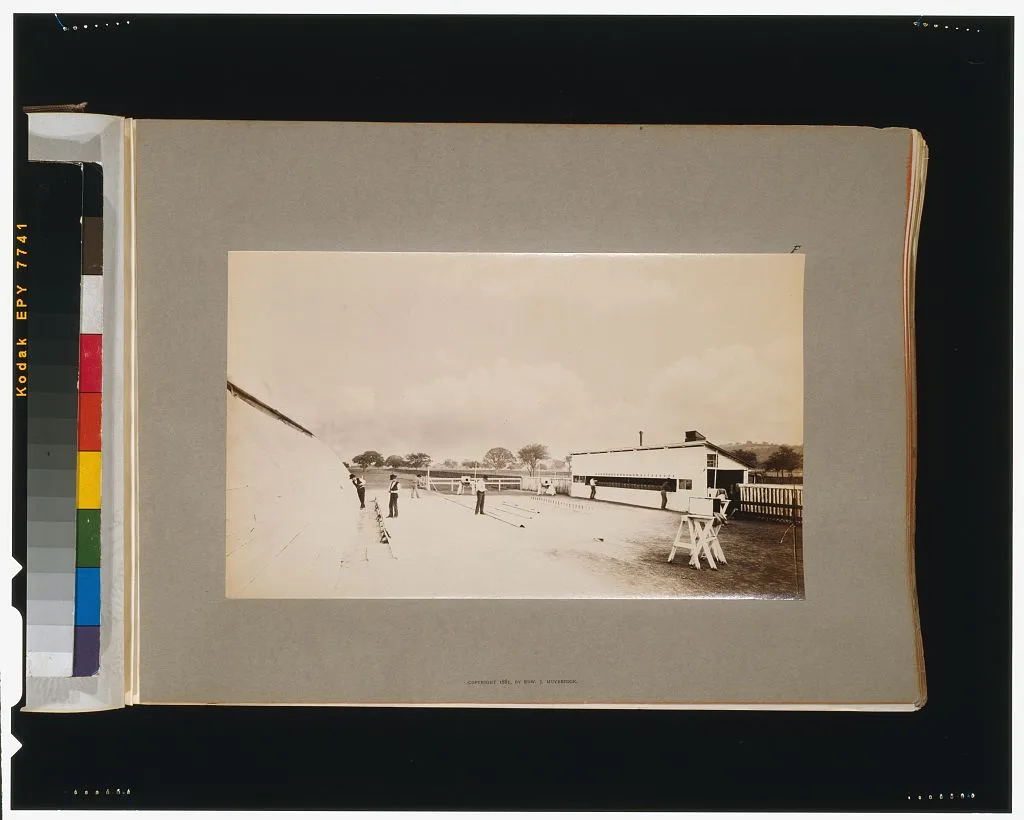
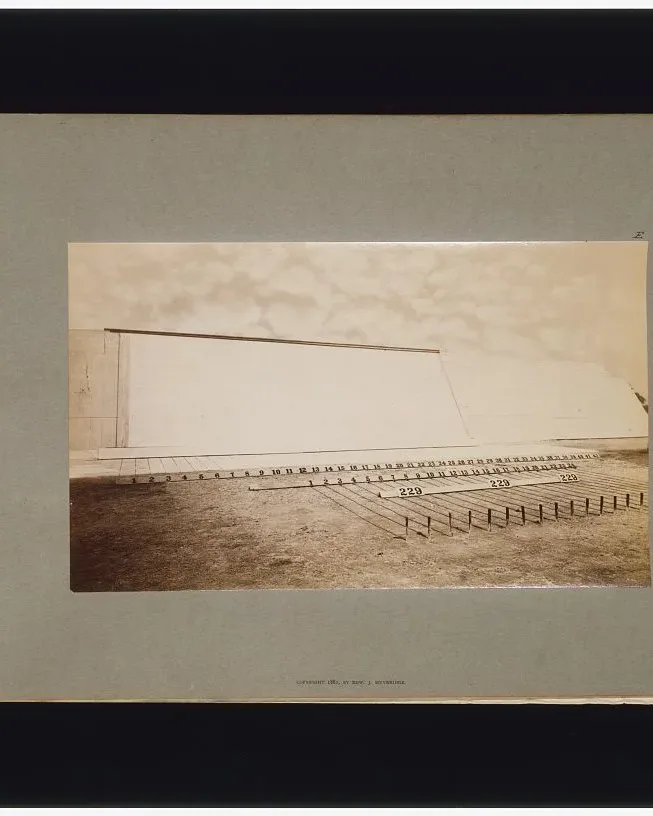
In 1881 Muybridge gathered the results of his 1878-79 Palo Alto experiments into a privately published album. Its opening photographs show the apparatus itself: the white backdrop, the ruled track and the shed holding 24 cameras.
- Date
- Photographed 1878-1879; published 1881 (copyright 1881 by Edw. J. Muybridge)
- Medium
- Album of mounted photographs; the Library of Congress plates are albumen prints
- Location
- Made at the Palo Alto Stock Farm, California; published in San Francisco
- Collection
- Library of Congress Prints and Photographs Division, Illus. in QP301 .M75 (Case X)
- Also known as
- The attitudes of animals in motion: a series of photographs illustrating the consecutive positions assumed by animals in performing various movements; executed at Palo Alto, California, in 1878 and 1879; General view of experiment track, background and cameras; Muybridge Palo Alto camera track
An album of the Palo Alto experiments
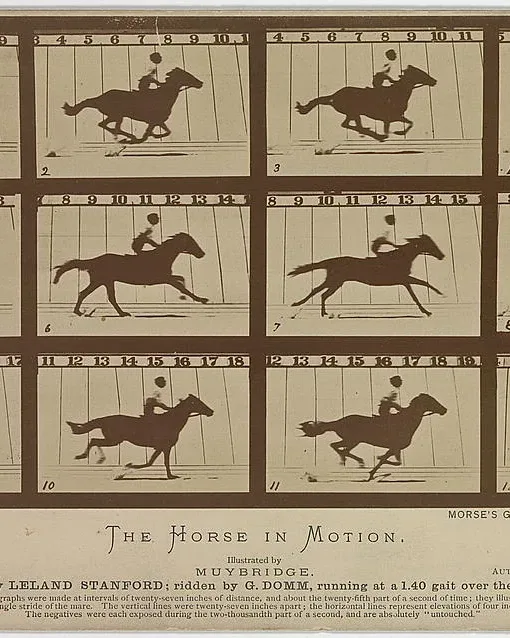
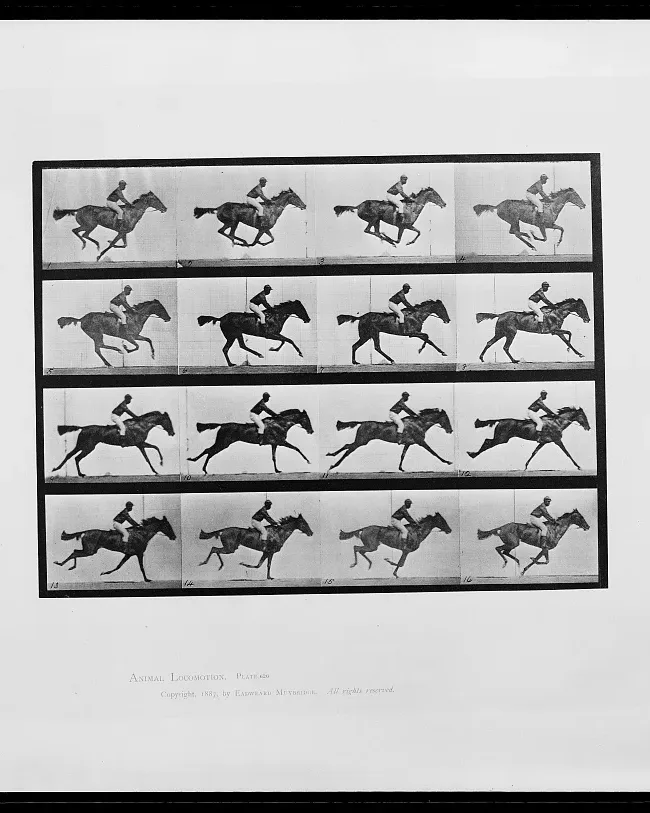
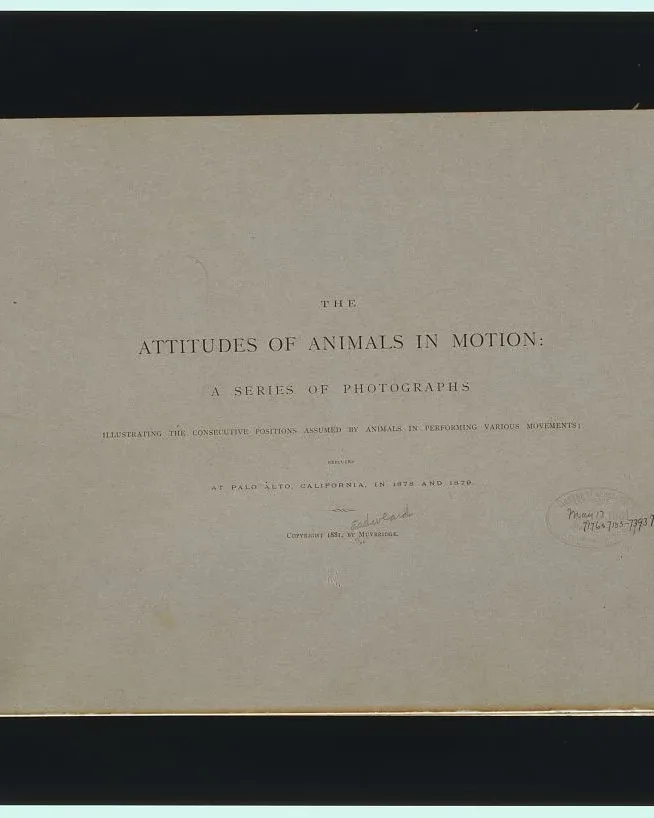
After the success of the 1878 cards, Muybridge carried on working at Leland Stanford's Palo Alto Stock Farm through 1879, now with a battery of 24 cameras. He photographed horses walking, trotting, cantering, running, jumping and hauling, along with cattle, deer, dogs, a boar, goats and human athletes. In 1881 he gathered the results into an album titled The Attitudes of Animals in Motion, subtitled a series of photographs illustrating the consecutive positions assumed by animals in performing various movements, executed at Palo Alto, California, in 1878 and 1879.
The album was published privately, in a very small edition, and copies varied. Stanford University's copy has six preliminary leaves and 170 pages of mounted photographs. The J. Paul Getty Museum's copy is catalogued as printed by an iron salt process, while the plates held by the Library of Congress are albumen prints.
The photographs of the apparatus
The album opens with a set of introductory photographs, each identified by a letter, that show how the work was done. They are among the most useful images Muybridge ever made, because they document his method. The record featured here, titled General view of experiment track, background and cameras, shows the whole arrangement at once: the background, the track and the building that housed the cameras.
Companion plates, also in this archive, show the front of the operating room with 24 cameras arranged parallel to the track, twelve inches apart from lens center to lens center, each with an electro-shutter in front; a close view of a camera and the back of a shutter; the shutter panels before, during and after an exposure; the operating track itself, covered in rubber flooring and crossed with lines twelve inches apart; and a general view of the Palo Alto Stock Rancho.
How the system worked
In his 1882 lecture at the Royal Institution, Muybridge described the setup shown in these plates. Threads were stretched across the track twelve inches apart at about the height of the animal's chest. As the animal broke each thread it closed an electric circuit, and an electromagnet released the two panels of the shutter in front of the matching camera, exposing a wet collodion plate. Because the cameras and threads were spaced at the same twelve-inch interval, each frame recorded the animal one foot further along, and the numbered lines on the track let a reader work out the length of a stride.
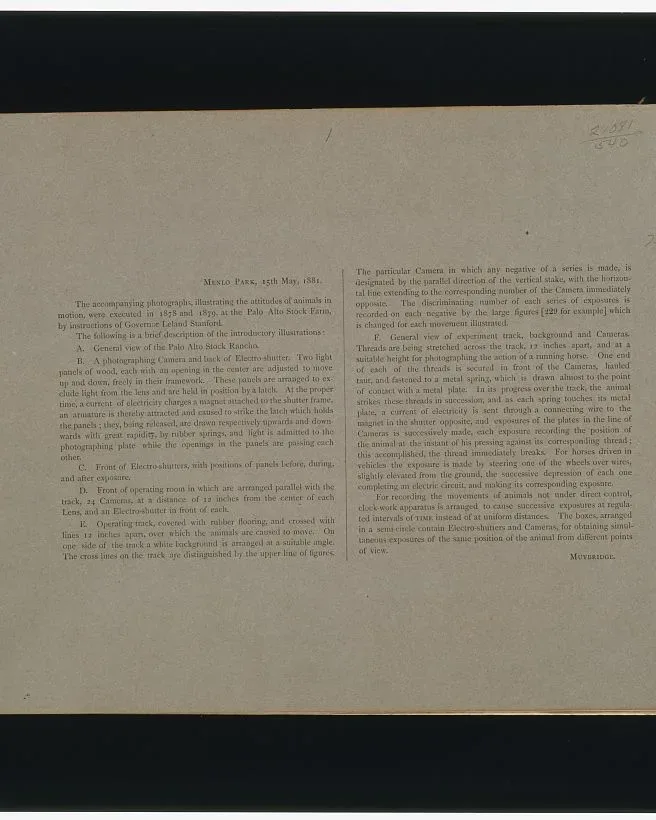
Muybridge's explanatory note at the start of the album makes the same point: each camera recorded the animal at every twelve inches of its progress.
What the sequences show
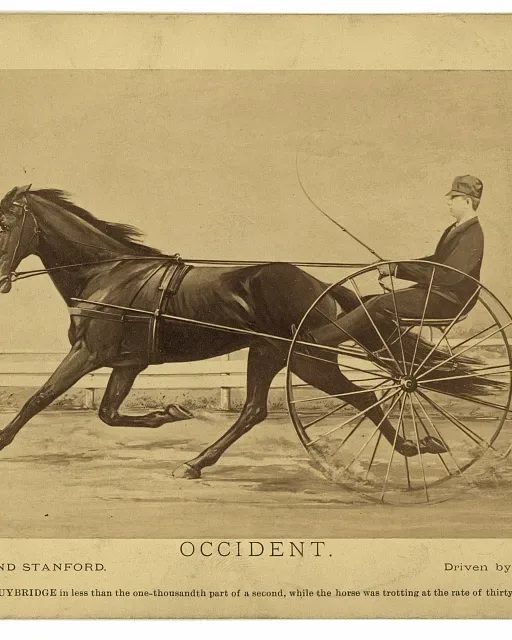
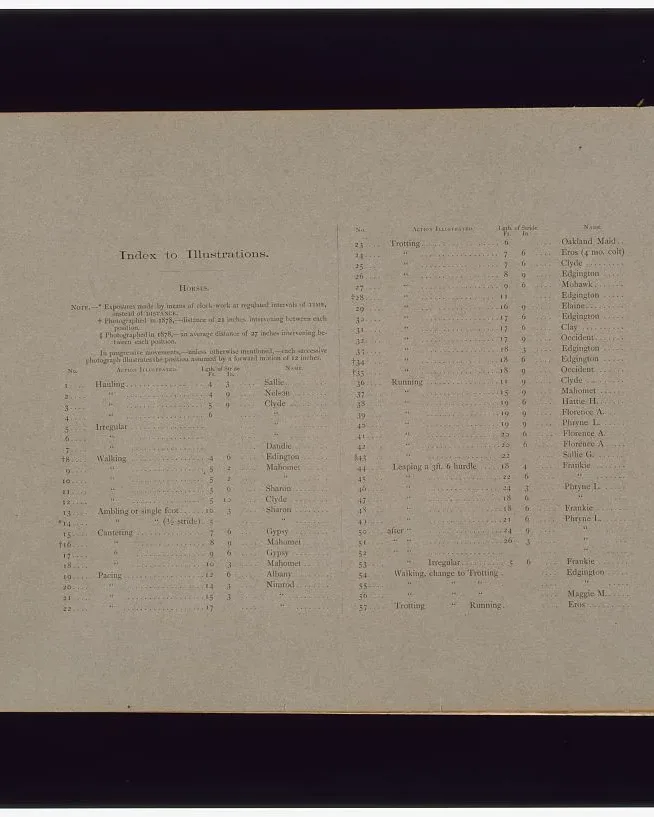
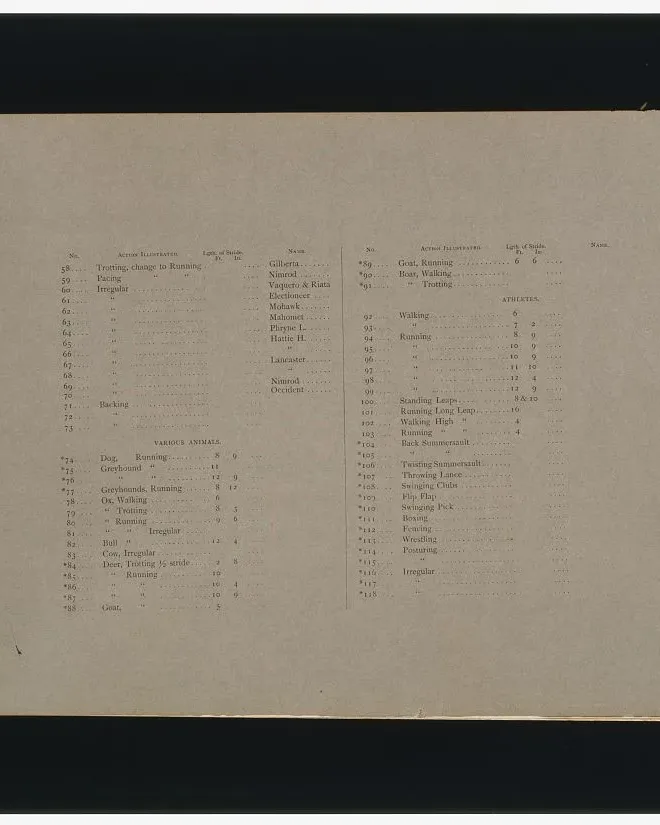
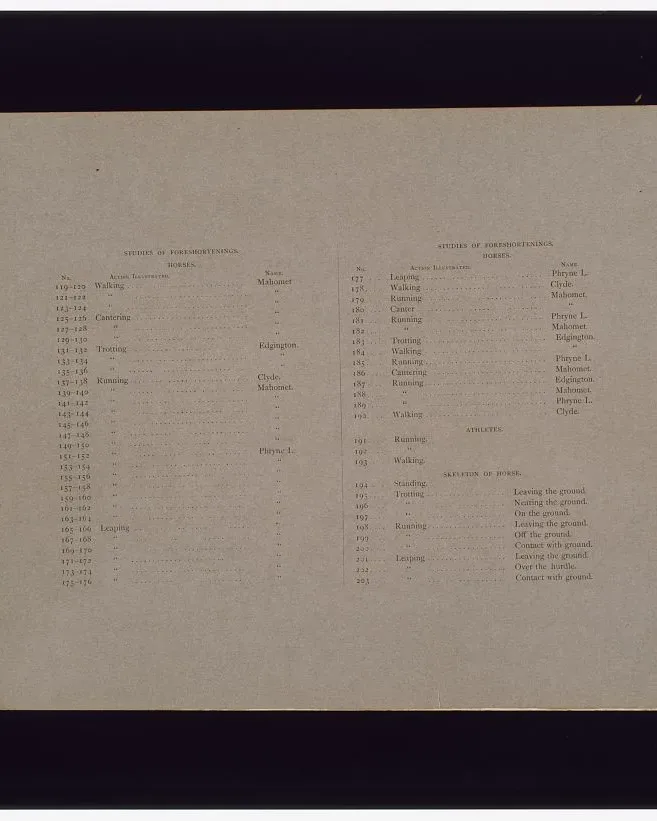
After the introductory views come the sequences, most of them horses identified by name. The Library of Congress plates in this archive include the trotters Edgington, Occident, Elaine and Clay pulling sulkies, Mahomet and Gypsy cantering under a rider, Sharon ambling, Clyde and others hauling loads, and a four-month-old colt named Eros trotting. Other plates show cattle, deer, dogs, goats, a boar and athletes running, leaping, boxing and fencing.
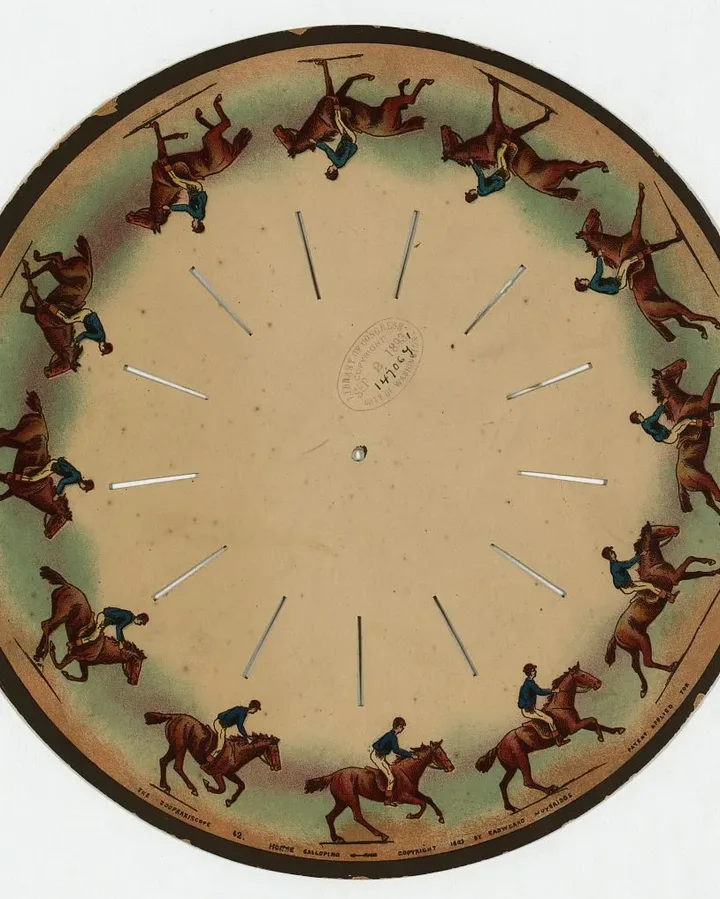
Among the most unusual are photographs of a horse skeleton posed in the positions of walking, trotting, running and leaping, made to compare the living animal with its underlying structure. A horse skeleton also appears on the only zoopraxiscope glass disc that uses photographs rather than painted figures.
Credit and controversy
The album mattered to Muybridge because the work was soon published under another name. In 1882 Stanford commissioned J. D. B. Stillman to write a book called The Horse in Motion, illustrated with plates drawn from Muybridge's photographs. Muybridge was not credited prominently, and as a result the Royal Society of Arts in London withdrew an offer of funding and declined to publish a paper by him. He sued Stanford; the case was delayed and eventually dismissed. The 1881 album, carrying Muybridge's own 1881 copyright, remains the clearest statement of what he made at Palo Alto.
Muybridge also used the title for his 1882 Royal Institution lecture, The Attitudes of Animals in Motion, Illustrated with the Zoopraxiscope, and a large set of the sequences was later printed as sheets arranged for the zoetrope.
Where to see it
Copies of the album are held by Stanford University Libraries, the J. Paul Getty Museum and Kingston Museum, which has two copies from Muybridge's own bequest. Pages from the Library of Congress copy, including the introductory illustrations, title page and index pages, appear in this archive. The ground where the photographs were made is now the Stanford University campus, marked by California Historical Landmark No. 834.
Other versions in the archive
[Title page of "The attitudes of animals in motion"]
1881
[Page of text with description of introductory photographs…
1881
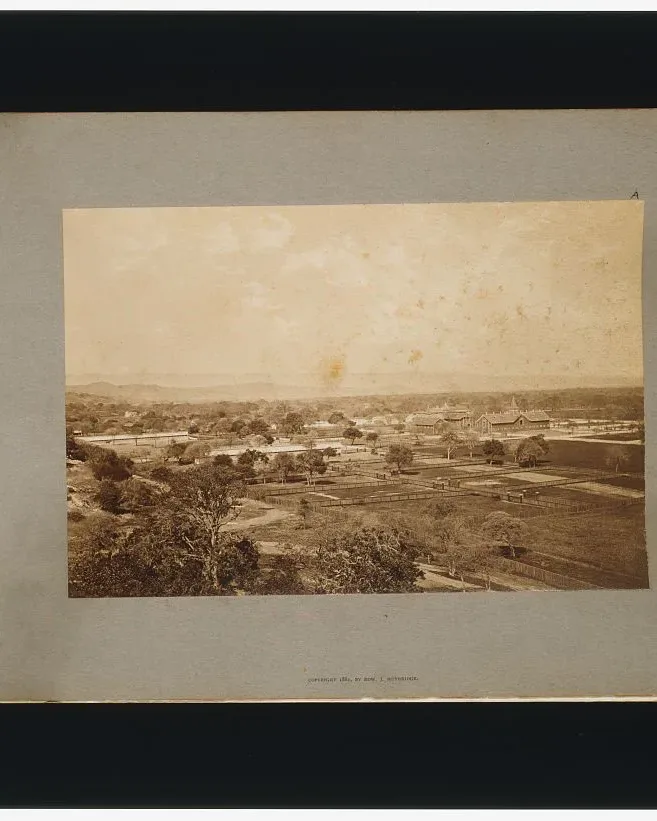
General view of the Palo Alto Stock Rancho
1881
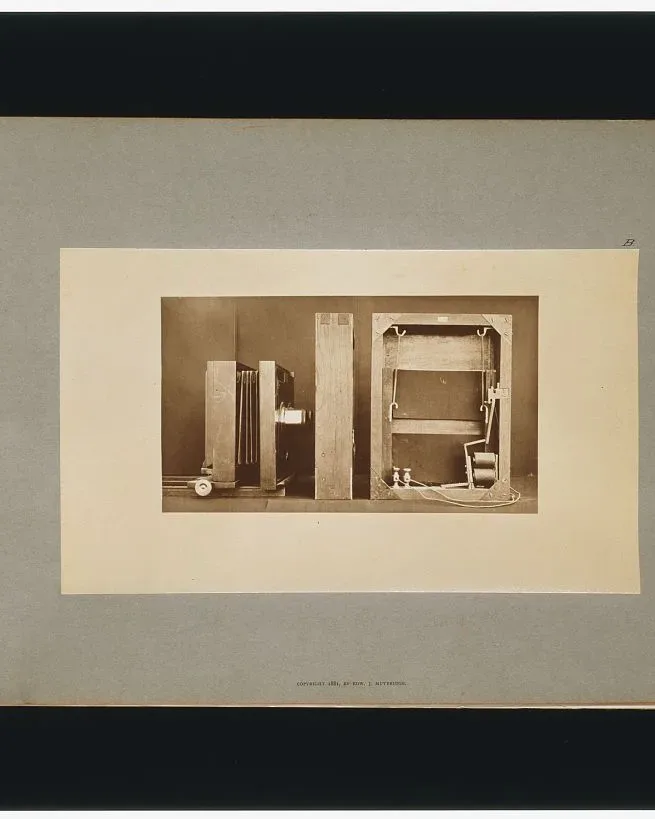
[A photographing camera and back of electro-shutter]
1881
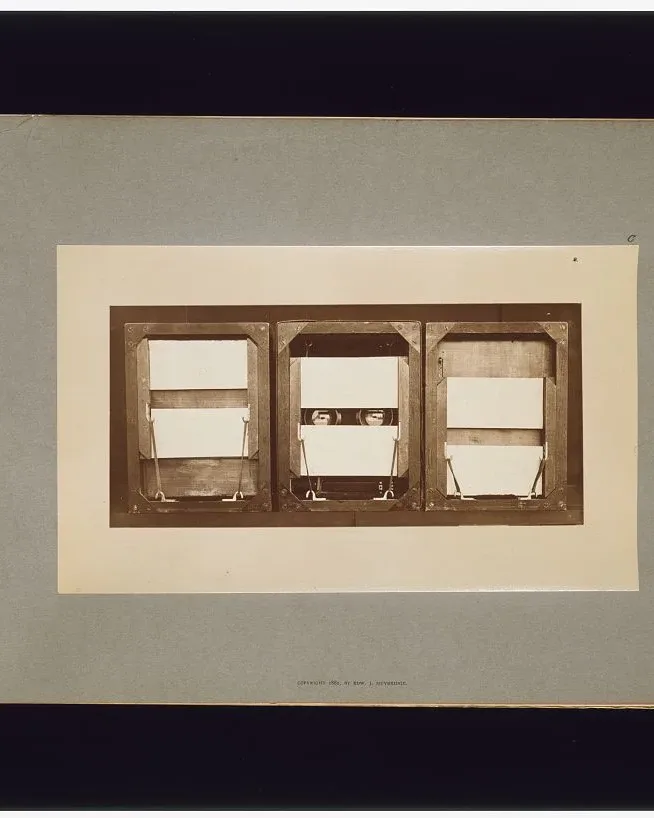
Front of electro-shutters, with positions of panels before,…
1881
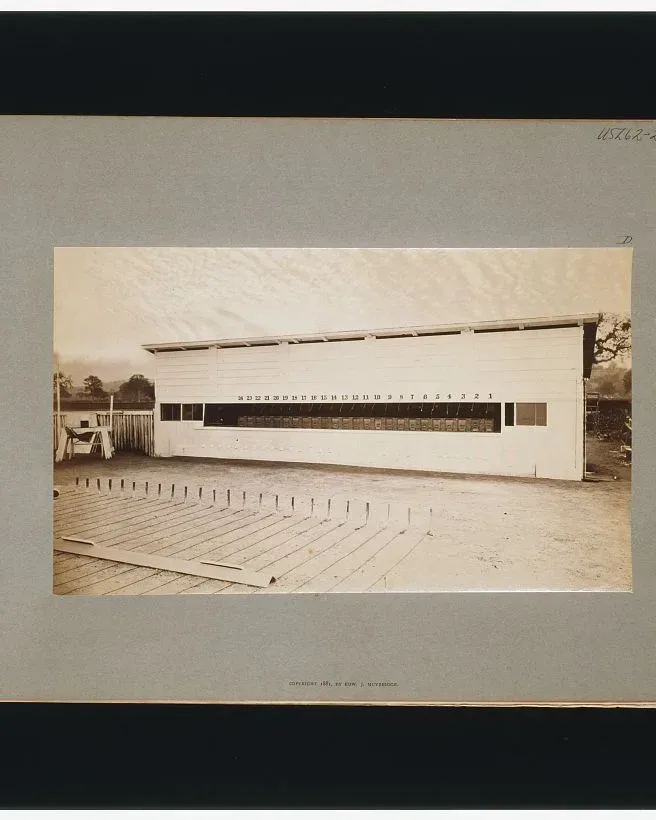
Front of operating room in which are arranged parallel with…
1881
Operating track, covered with rubber flooring, and crossed…
1881
[Page of text with "Index of illustrations" from "The…
1881
[Page of text with "Index of illustrations" from "The…
1881
[Page of text with "Index of illustrations" from "The…
1881
Frequently asked questions
What is The Attitudes of Animals in Motion?
It is an album Muybridge published privately in 1881, collecting the motion photographs he made at Leland Stanford's Palo Alto farm in 1878 and 1879. It includes photographs of the camera setup as well as the animal sequences.
How many cameras did Muybridge use at Palo Alto?
The 1878 Horse in Motion sessions used twelve cameras. By 1879 the battery had grown to 24 cameras set twelve inches apart, as shown in the album's photograph of the operating room.
How were Muybridge's cameras triggered?
At Palo Alto, threads were stretched across the track; as the animal broke each one, it closed an electric circuit that released an electromagnetic shutter on the matching camera.
Why did Muybridge sue Leland Stanford?
Stanford's 1882 book The Horse in Motion, written by J. D. B. Stillman, used Muybridge's photographs without giving him prominent credit, which cost him support in London. His lawsuit was eventually dismissed.
Sources
- Library of Congress: General view of experiment track, background and cameras (catalog record 2008680812)
- Library of Congress: Front of operating room ... 24 cameras (catalog record 2008680809)
- Stanford Libraries: The attitudes of animals in motion (1881)
- Google Arts & Culture / J. Paul Getty Museum: The Attitudes of Animals in Motion (85.XO.362)
- Muybridge, The Attitudes of Animals in Motion, Illustrated with the Zoopraxiscope (Royal Institution lecture, 13 March 1882), Project Gutenberg
- Kingston Heritage: Eadweard Muybridge (1830-1904)